Shop Copper Peptide Serums and GHK-Cu Skincare
Discover copper peptides and GHK-Cu skincare, explore potential benefits, ingredients, safety considerations and how to choose a quality copper peptide serum.
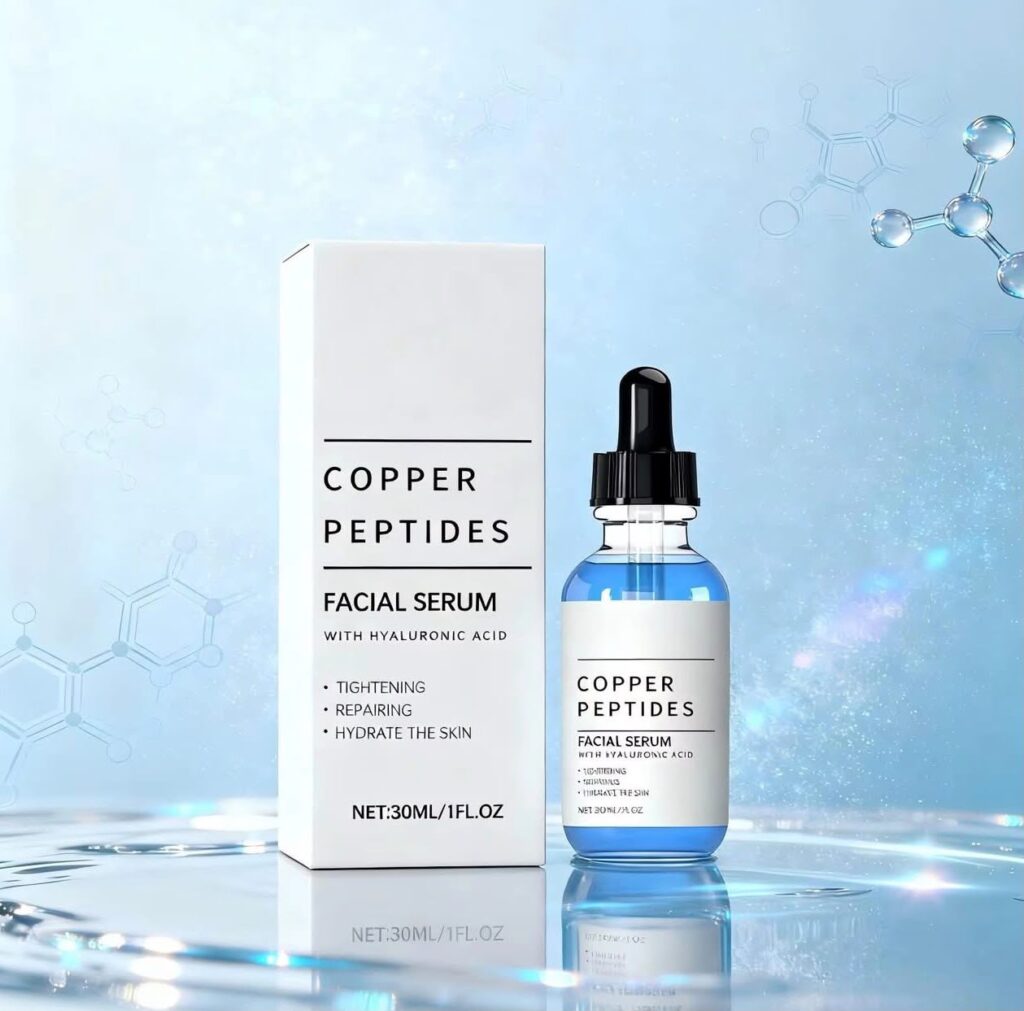
Copper peptides have become an increasingly discussed ingredient in modern skincare, particularly among people researching skin hydration, the appearance of fine lines, and products designed to support a healthy-looking complexion. Among the ingredients attracting attention, GHK-Cu copper peptide is frequently mentioned in discussions about cosmetic skin care and peptide-based formulations.
However, choosing a copper peptide product involves more than following a trend. Consumers need to understand what copper peptides are, how GHK-Cu differs from other peptide ingredients, what scientific research actually shows, and how to assess a serum or cream before purchasing it.
Copper peptides are compounds formed when certain peptides bind to copper ions. Peptides are short chains of amino acids, which are the building blocks used to form proteins and other biological molecules.
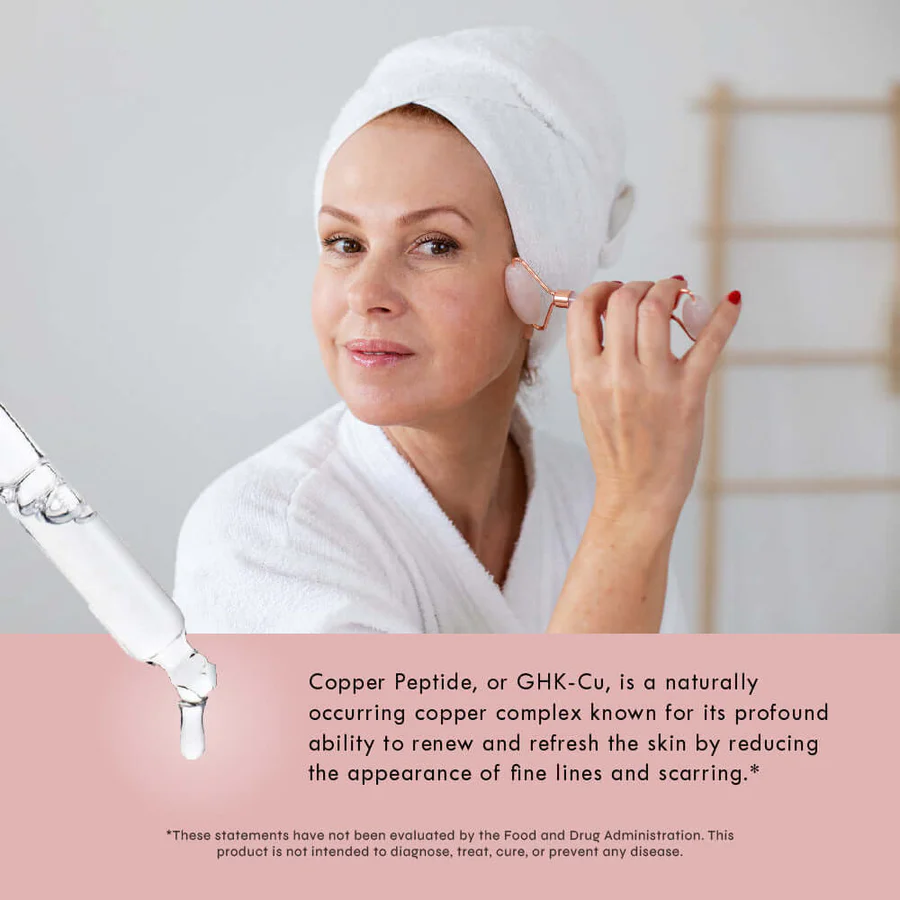
One copper peptide frequently discussed in skincare research is GHK-Cu. Its peptide component, GHK, consists of three amino acids: glycine, histidine, and lysine. When GHK binds copper, it forms the complex commonly referred to as GHK-Cu.
GHK-Cu is the copper-bound form of the tripeptide GHK. It is often called copper tripeptide-1 in cosmetic ingredient contexts, although ingredient naming and product composition should be checked against the actual label.
Researchers have investigated GHK and GHK-Cu in connection with skin biology, extracellular matrix components, inflammatory pathways, and tissue-remodelling processes. Much of this literature involves laboratory or preclinical research, and the strength of evidence differs between proposed applications.
A useful review of the research is available in the peer-reviewed literature on GHK as a natural modulator of cellular pathways in skin regeneration.
The term peptides covers a broad range of ingredients. Different peptide sequences can have different properties and intended functions.
GHK-Cu is a copper-binding peptide complex. Other cosmetic peptides may be designed or marketed for different formulation purposes, including supporting the appearance of smoother skin or complementing a moisturising routine.
The ingredients should not be treated as interchangeable.
When comparing a copper peptide serum with another peptide skincare product, consider:
The exact peptide ingredient listed on the label.
The complete formulation and other active ingredients.
The manufacturer’s available ingredient documentation.
The intended cosmetic use.
The quality of evidence supporting the finished product’s claims.
Whether the product has appropriate directions and safety information.
A product containing several peptides is not automatically better than one containing a single peptide. The overall formulation, stability, suitability, and available evidence matter more than the number of ingredients listed.
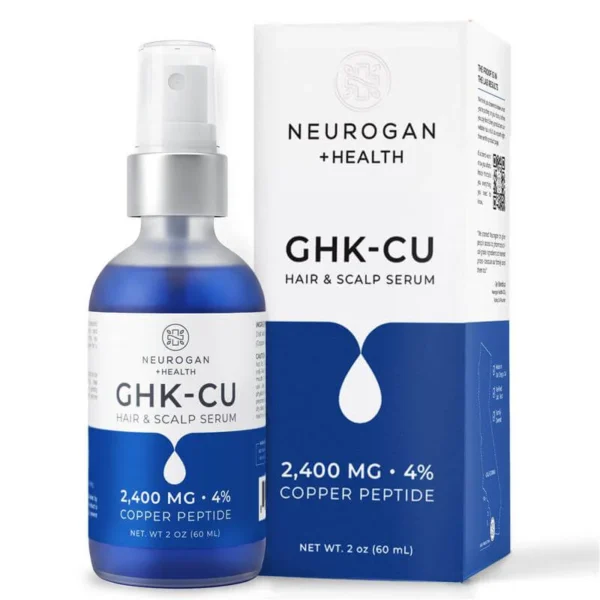
$55.00
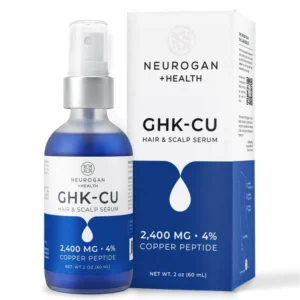
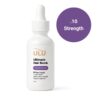
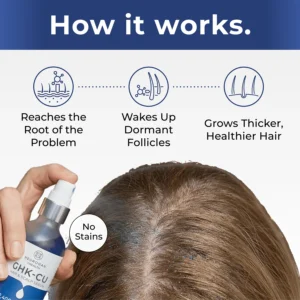
GHK-Cu Copper Peptide Hair & Scalp Serum supports stronger, fuller-looking hair with advanced copper peptides that nourish the scalp and promote healthy growth.
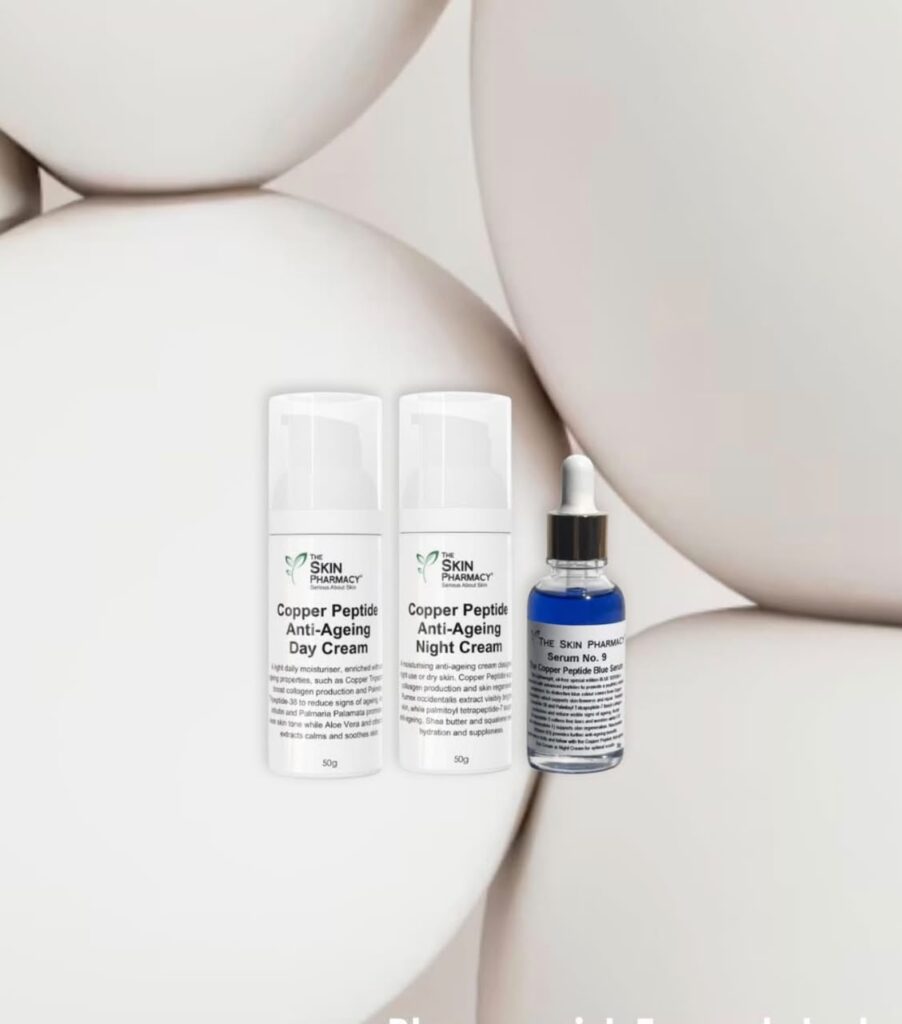
If you are searching for the best copper peptide serum, start by deciding what you want from your skincare routine.
A useful comparison should focus on the finished product rather than relying on marketing language alone.
Look for the specific copper peptide named by the manufacturer. Ingredient names may include Copper Tripeptide-1, depending on the formulation and applicable ingredient nomenclature.
Do not assume that a product contains GHK-Cu simply because its packaging uses the words copper, peptide, or blue serum.
If the ingredient list is unavailable or inconsistent with the product description, ask the seller for clarification before purchasing.
The complete ingredient list also matters because the base formula, preservatives, humectants, and other ingredients influence the product’s overall characteristics.
A copper peptide serum may use a water-based, gel-based, or other formulation. Each has different application characteristics.
Consider whether the product is suitable for your preferred routine and whether the manufacturer provides clear directions for use.
A product’s colour is not sufficient evidence of its copper peptide concentration, purity, stability, or effectiveness. Similarly, a higher advertised percentage does not automatically establish better performance.
Packaging can affect how a cosmetic product is stored and used. Follow the manufacturer’s instructions for temperature, light exposure, opening, and shelf life.
Check the product’s batch or lot identification, expiry or period-after-opening information where applicable, and contact details for the responsible business.
Do not assume that a dark bottle or airless pump proves superior stability. Packaging suitability depends on the actual formula and how it interacts with the container.
A credible seller should provide enough information for customers to understand what they are purchasing.
Safety depends on the specific ingredient, concentration, finished formulation, intended use, and individual sensitivity.
Do not assume that an ingredient is suitable for everyone simply because it is used in cosmetics. Likewise, the fact that an ingredient has been studied in a laboratory does not establish the safety of every product containing it.
Before use, review the product’s ingredients, warnings, and directions. If you have a history of reactions to skincare ingredients, seek appropriate advice before introducing a new product.
Quality cannot be established by the ingredient name alone.
Several factors should be considered when assessing a copper peptide serum or cream.
The product should clearly identify its ingredients and avoid presenting unrelated peptide compounds as interchangeable.
The finished formula should be appropriate for its intended use, with suitable storage instructions and packaging.
Stability should be supported by relevant product testing rather than inferred from appearance or marketing language.
Manufacturers should use appropriate processes and quality controls for the product they make. Where a company makes specific manufacturing or testing claims, those claims should be documented.
Do not assume that every product sold online has the same manufacturing standards.
If you are searching for where to buy copper peptides, begin with product transparency rather than promotional claims.
A retailer should clearly identify the product, provide an accurate ingredient list, state the package size, explain how it should be used, and make relevant safety information accessible.
Before placing an order, check:
Whether the product is clearly identified.
Whether the ingredient list matches the description.
Whether the seller provides verifiable business information.
Whether the price and shipping charges are transparent.
Whether the returns and refund policy is easy to find.
Whether product claims are supported by appropriate evidence.
Whether the seller complies with the applicable laws in your location.
These checks help you make a more informed purchasing decision, but they do not guarantee a product’s authenticity or effectiveness.
Understanding common mistakes can help consumers compare products more carefully.
A percentage is meaningful only when the manufacturer clearly explains what it represents. Higher concentration does not automatically mean better results or greater suitability.
A paper discussing GHK-Cu does not prove that a particular retail serum has been tested or shown to deliver the same outcome.
Look for evidence that relates to the finished product and its intended use.
Words such as “genuine,” “verified,” and “official” should be supported by a clear, truthful basis.
A website should not imply that it is affiliated with a manufacturer unless the relationship can be substantiated.
Copper peptides are one option within a much larger skincare market. They are not necessarily a replacement for other ingredients that serve different purposes.
Retinol is a vitamin A derivative widely used in skincare routines focused on the appearance of fine lines, uneven texture, and other signs of ageing.
Copper peptides and retinol are different ingredient categories. Their mechanisms, evidence bases, formulations, and potential for irritation are not identical.
Copper peptides have become a popular ingredient in modern skincare, particularly in products designed to [...]
Copper peptides before and after results have become a popular topic among people looking to [...]
Aging is a natural process, but a consistent skincare routine can help maintain smoother, healthier-looking [...]
Introduction: Understanding Copper Peptides in Skincare Copper peptides skin care products have attracted attention among [...]
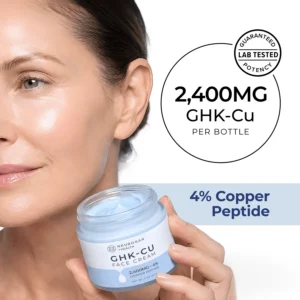
Introduction: Why Are Copper Peptides Popular in Facial Skincare? Copper peptides for face have become [...]
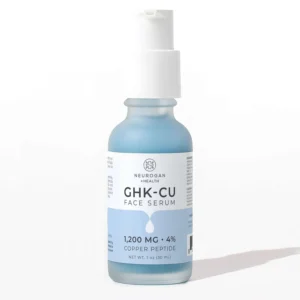
Introduction: Why Are Copper Peptides Popular in Skincare? Copper peptides for skin have attracted attention [...]
If you want to buy copper peptide serum for your skincare routine, it is worth [...]
Introduction to Copper Peptides GHK-Cu Copper peptides GHK-Cu have attracted attention in skincare because of [...]